

True Rife Machine: What Separates a Genuine Device from the Rest?
The market for frequency therapy devices has never been larger, and that is both a good thing and a problem. More people than ever are exploring bio-electric wellness, which means more devices are available. But it also means more low-quality products are trading on the Rife name without the technology to back it up. At Health Products 2, we think you deserve to know exactly what makes a true rife machine and how to tell the difference before you spend your money.
What Did Royal Rife Actually Build and Why Does It Matter?
Royal Raymond Rife built his original devices in San Diego in the early 20th century. His technology used plasma tube broadcasting to deliver specific electromagnetic frequencies to patients without physical contact. The frequencies he used were mapped to specific pathogens based on what he called mortal oscillatory rates, the resonant frequency at which each microorganism’s cellular structure would destabilize and fail.
He treated 16 cancer patients with documented positive outcomes. His lab was subsequently destroyed and his research scattered rather than expanded upon, as our own Health Products 2 story describes in detail. What survived was eventually used by researchers and engineers to rebuild working devices that carry Rife’s principles forward in modern form.
Understanding this history matters because it defines what a real rife machine actually is. It is not just any device with Rife in the name. It is a device that genuinely delivers programmable frequencies in the kHz range with stable, calibrated output and a verified frequency library mapped to health conditions.
What Makes a Device a Real Rife Machine?
A genuine frequency therapy device needs to meet several concrete requirements. First, it must operate in the kHz range. These are the frequencies relevant to biological targets. Second, the output must be stable and calibrated, meaning the frequency delivered matches the frequency programmed, without drift during sessions. Third, the device must come with a frequency library that maps health conditions to specific frequency sets, giving users a structured and reliable starting point.
Beyond the hardware, a real rife machine comes with documentation. You should be able to read the product specifications, understand the operating functions, and access support from the manufacturer or distributor when questions come up. Devices that lack these basics are not operating in the same category, regardless of what they call themselves.
Dr. Hulda Clark and Dr. Bob Beck both validated Rife’s foundational principles through their own independent research and built devices that extended his work in different directions. The Zapper and the Rife machines in our current lineup at Health Products 2 are built on all three of these research traditions.
How Do You Identify a Low-Quality Rife Device?
Low-quality devices are easy to spot once you know what to look for. Here are the most common red flags:
- No published frequency specifications or output documentation
- No frequency library or protocol guidance included with the device
- Single fixed frequency output with no programmability
- No contact information or post-purchase support from the seller
- Pricing that is significantly below market rate for genuine devices
- No accessory options for different delivery methods
A device that cannot confirm its output specifications is not a therapeutic tool. It may generate some electrical signal, but without calibration and programmability, it cannot do what a true rife machine does. The savings at purchase rarely compensate for the loss in therapeutic value over time.
What Operating Functions Should a True Rife Machine Have?
This is where genuine devices stand apart from imitations in a very practical way. A quality rife machine allows you to program up to 10 frequencies per health condition and select from a range of operating functions that determine how those frequencies are delivered.
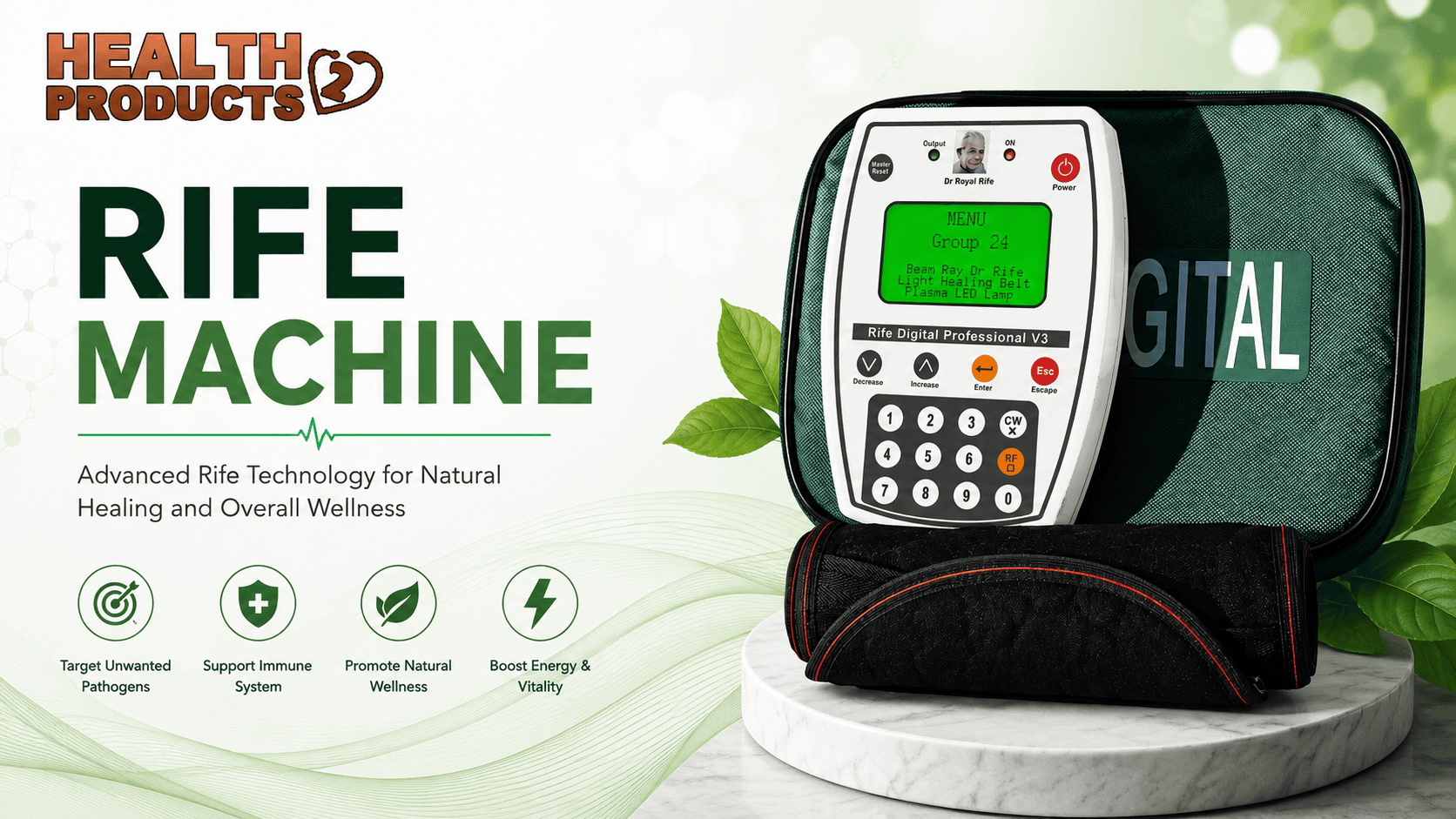
At Health Products 2, both the Rife Digital Professional V3 and the Zapper Digital Professional V3 offer the same set of functions: Sweep, Pulse Sweep, Run, Pulse Run, Convergence Sweep, Super Sweep, and Group Sweep. Each function delivers the programmed frequencies in a different pattern and timing structure, and the choice between them depends on your specific protocol and health target. A full explanation of each function is available at rifeandzappers2.com.
This level of programmability is what separates a genuine device from a cheap imitation. If a device does not offer these options, it is not a true rife machine.
What Does Health Products 2 Offer and Why Does It Qualify?
Our current flagship is the Rife Digital Professional V3. It delivers stable, programmable kHz-range output with a full frequency library, multiple delivery accessory options, and complete team support. The Beamer device is available separately or as its own V3 bundle for users who want targeted local delivery alongside mat or electrode use.
We also still have Zapper Digital Professional V3 stock available. The Zapper is being phased out due to lower sales volume, not because of any difference in quality or performance. Both machines are built to the same standard and operate identically. If you already own a Zapper, it is just as effective as the Rife V3.
The V4 is currently in development and will represent the next step forward in our lineup. Visit our home page to explore current options, and reach our team at 206-708-6408 or through our contact page before you buy.
True Rife Machine Standards: Why Health Products 2 Sets the Bar
A true rife machine is defined by what it actually delivers, not by the name on the box. At Health Products 2, every device we carry meets the standard that Rife’s original research established: programmable kHz frequencies, stable output, a verified frequency library, and genuine support from a team that understands the technology. That is the bar we hold ourselves to, and it is the bar you should hold any device to before buying.